Institutional Catering Equipment: Hospitals, Airlines and Large-Scale Operations
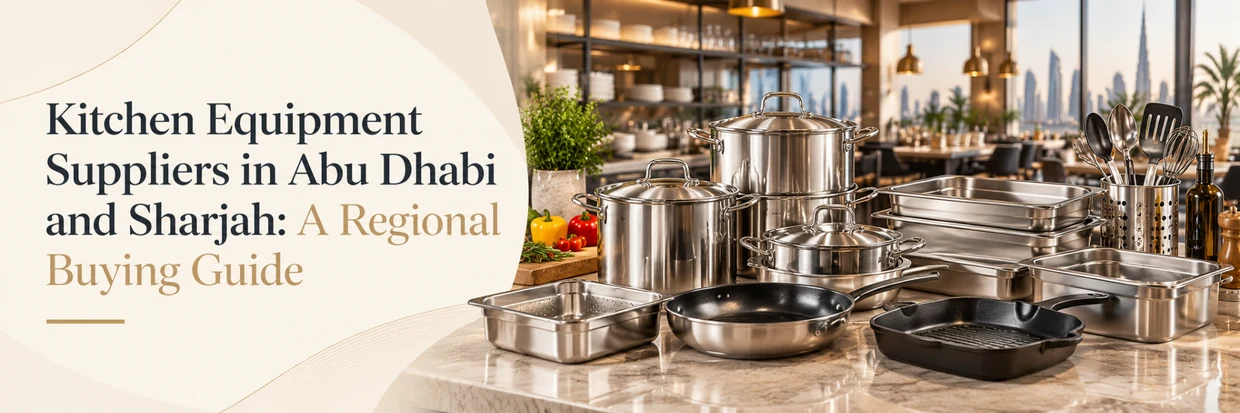
Before most restaurants open, a hospital kitchen may have plated hundreds of breakfasts. Each tray can carry a different diet. Across the city, a flight kitchen is packing meals for planes leaving within hours. Every one of those meals must arrive hot, covered and correct, whether it ends up on a ward or in a passenger’s seat.
That’s the reality of institutional catering. Hospitals, flight kitchens and large-scale operations run on volume, schedules and strict rules. In this blog, we have explained what each one needs, and how to source it in the UAE.
The short answer: Institutional kitchens need the same core tools as restaurants, plus three extras. They need equipment that keeps food at safe temperatures over distance. They need serveware built for volume and special diets. And they need a supplier who can match every reorder.
What Makes Institutional Catering Different from Restaurant Catering?
Institutional catering serves people who didn’t choose the menu, on a fixed schedule, often far from the kitchen. That changes almost every equipment decision.
Factor | Restaurant | Institutional kitchen |
Volume | Covers per service | Hundreds or thousands of meals a day |
Menu | Changes with the chef | Fixed cycles, planned weeks ahead |
Special diets | Some requests | Many diets on every service |
Distance to the plate | A few metres | Wards, floors or a whole flight |
Compliance | Food safety rules | Food safety rules plus client and contract standards |
Replacement | Occasional | Constant, because volume wears items out faster |
What do Hospital and Healthcare Kitchens Need?
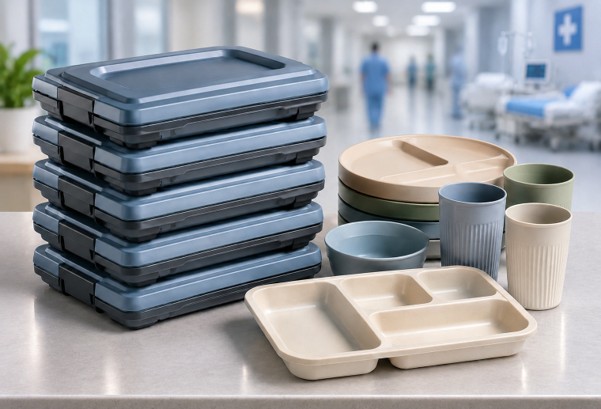
Hospital kitchens need three things at once: strict hygiene, reliable temperature control and serveware that keeps every diet separate. Good healthcare catering services depend on getting all three right on every tray. Healthcare facilities can source commercial catering equipment and kitchen supplies in the UAE, including GN pans, food storage containers, cookware and food preparation essentials for high-volume operations.
How do Healthcare Kitchens meet Hygiene and Compliance Rules?
In Dubai, the Dubai Municipality Food Code sets the baseline. Abu Dhabi kitchens follow ADAFSA, so confirm the details for your emirate. The Food Code requirements map directly to equipment:
- Colour-coded cutting boards to keep raw meat, seafood, vegetables and ready-to-eat food apart (section 3.4.1(l)). Ambrogio Sanelli’s colour-handled knife lines match the same system.
- Food-grade containers for storage (section 3.5.4(a)). GN containers in polypropylene handle -40°C to 70°C, and polycarbonate -40°C to 100°C, per Khiara’s catalogue. For more guidance on choosing suitable materials, containers and preparation tools, read our guide to food-grade kitchen equipment in the UAE.
- Calibrated probe thermometers, because core cooking temperatures must be checked and recorded (section 3.2.8(c)).
Hot holding at 60°C or above until food is served (section 3.2.10(a)).
How do Hospitals Manage Volume and Meal Schedules?
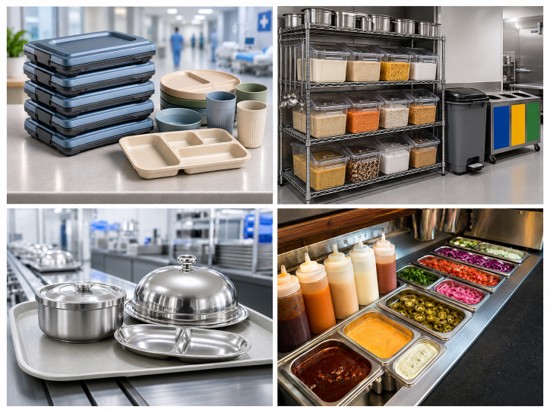
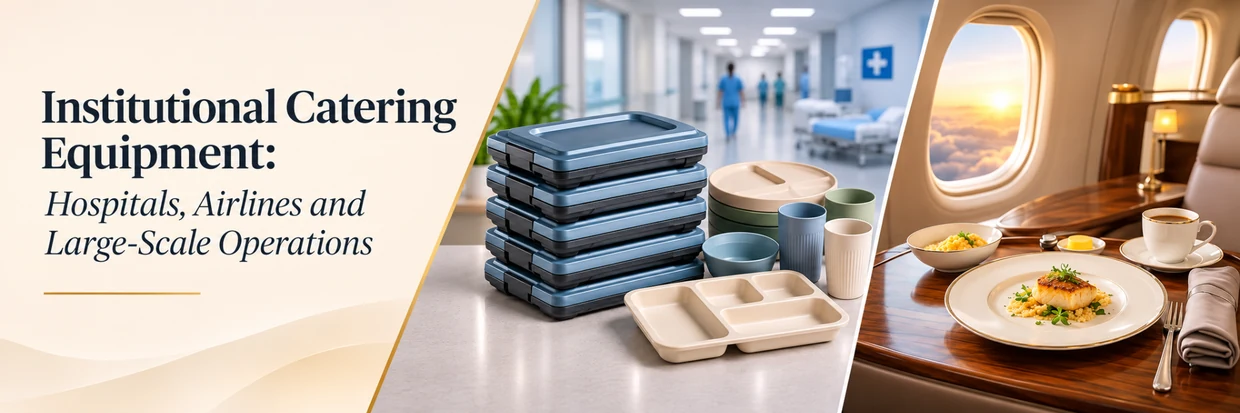
They build each meal as a tray, then move trays in batches. The right serveware makes that faster:
- Compartment plates with two or three sections keep diets and portions separate, with fewer pieces per tray
- Lidded bowls, cups and stackable lidded meal trays keep food covered from kitchen to bed
- Non-slip trays stop items sliding during transport
- Insulated carriers hold food at temperature on the way to the wards
Healthcare facilities can explore commercial tableware and serveware for institutional catering, including plates, bowls, serving products and other essentials for organised meal service.
Which Companies Offer Complete Kitchen Fit-Out Services for Healthcare Institutions in the UAE?
A healthcare kitchen project usually involves two kinds of company. Fit-out contractors design and build the kitchen: ventilation, drainage, walls and fixed equipment. Hospital catering suppliers then provide everything the kitchen runs on every day.
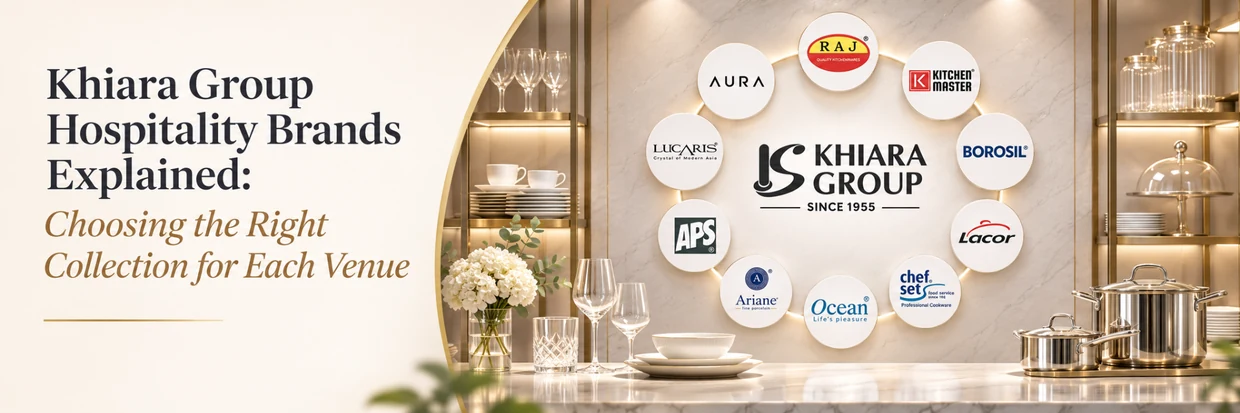
Khiara Group works on that second side. It supplies:
- Cookware, GN pans and food storage
- Prep tools, colour-coded boards and knives
- Patient serveware, compartment plates and lidded bowls
- Insulated carriers, trolleys and waste management products
For more information on coordinating cookware, preparation tools and storage across a commercial kitchen, explore our commercial kitchen fit-out equipment checklist.
Bring your supplier in while the kitchen is still being designed. That way, shelving, racks and storage fit the space you actually build. For a broader equipment planning reference, explore our restaurant opening checklist for supplies and equipment to understand how cookware, storage, preparation tools and service products can be planned before operations begin.
What Equipment does an Airline Flight Kitchen Need?
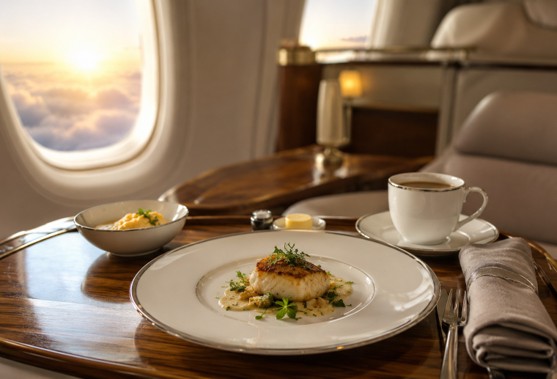
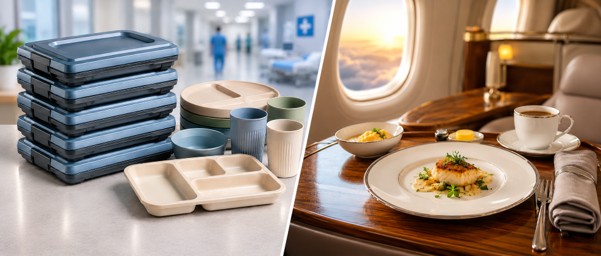
Airline catering has two halves: the kitchen on the ground and the service in the air. Khiara Group lists flight catering among the operations it supplies, with Emirates Flight Catering on its client list. Airline catering teams can explore flight catering equipment and bulk kitchen supplies for ground-based food preparation, storage and service operations.
One part sits with specialists. Galley trolleys and inserts follow aviation standards, and around 80% of airlines use the ATLAS standard, according to Aviation Souk. Those come from dedicated aviation suppliers.
What do Flight Kitchens Use on the Ground?
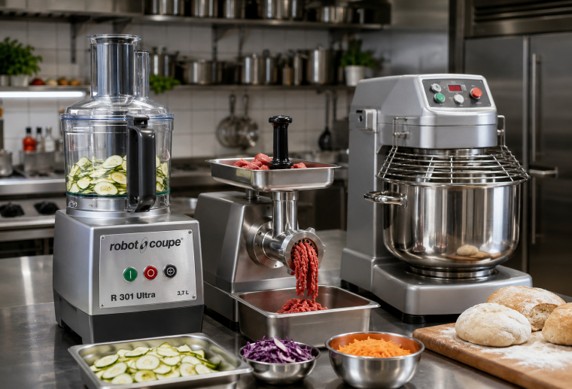
Kitchen equipments needed to on ground to cook food for Airlines
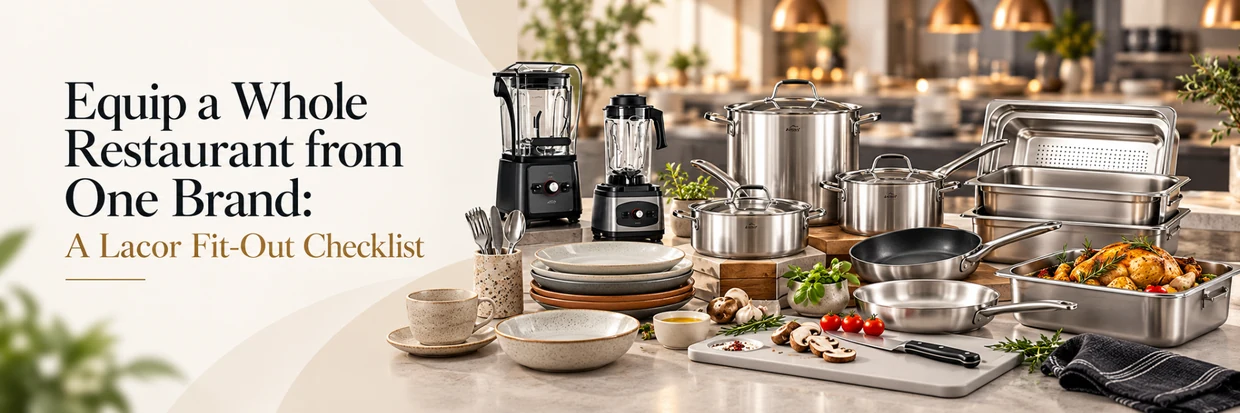
Flight kitchens prepare thousands of meals to tight departure times. The core airline catering equipment on the ground includes:
- GN pans and lids in standard sizes
- Commercial cookware for batch cooking
- Prep tools, scales and colour-coded boards
- Ingredient bins and labelled storage
Businesses sourcing wholesale cookware and kitchenware in the UAE can explore additional pots, pans, food preparation tools and kitchen essentials for their operations.
What Serveware Works for Passenger Meals?

Premium cabins serve meals much like a restaurant, in a much smaller space. Typical pieces include:
- Porcelain bowls, plates, cups and saucers, often with a silver rim or the airline’s decal. Khiara carries Ariane porcelain
- Crystal tumblers and stemware for wine and water, from brands such as Lucaris and RCR
- Cutlery, salt and pepper shakers, napkin rings and non-slip meal trays
How is Food Stored and Carried on Board?
Meals travel in lidded containers, compartment trays, casserole dishes and ramekins. This inflight catering equipment must stack neatly, seal well and survive repeated commercial washing.
How Should You Specify Equipment for Large-Scale Operations?
Specify for the busiest day and the longest journey, not the average. Use this checklist when you write the purchase specification:
Specify | Why it matters |
18/10 stainless steel for pots, pans and GN pans | Resists staining and pitting under constant use |
One GN size system across every site | Pans, lids and carriers fit every kitchen and trolley |
Insulated carriers for any journey over 30 minutes | Dubai Municipality’s transport guideline asks for extra temperature control on longer deliveries (GU63, section 1.4.1(d)) |
Separate containers for hot and cold food | Hot food stays at 60°C or above, cold food at 5°C or below |
Case-pack quantities with replacement stock | Breakage and wear never stop at institutional volumes |
Large institutional kitchens should also plan their purchasing quantities and replacement stock carefully. Our guide to bulk restaurant supplies in the UAE explains how to manage bulk orders, stock availability and repeat procurement.
On insulation, Khiara’s catalogue shows a Cam GoBox carrier holding hot food between 87°C and 81.2°C over four hours. Buyers can review the Khiara Group product catalogues to compare available cookware, GN pans, storage containers, serveware and other professional catering products before finalising specifications.
The cheapest quote rarely stays cheapest at this scale. Akshay Khiara explains why:
“A cheaper product isn’t necessarily cheaper if it needs to be replaced frequently, doesn’t perform well operationally, or isn’t consistently available.” Akshay Khiara, Director, Khiara Group
Buy equipment for catering services on cost over its whole life, not the price on the first invoice.
How do You Choose a Supplier for Institutional Contracts?
Choose a supplier that can keep up after the first order, not just fill it. Before signing an institutional supply agreement, review these six factors for choosing a reliable hospitality supplier in the UAE, including product range, stock availability, client references and ongoing support. The best hospital catering suppliers and institutional partners offer:
- Local stock of common GN sizes and replacement items
- One purchase order across cookware, serveware, storage and transport
- Samples your team can test before you sign off
- A dedicated account manager for selection, quotes and order coordination
- Bulk pricing and availability for large orders
Forecasting matters as much as the supplier.
“Good forecasting and maintaining the right stock levels can prevent a small supply issue from becoming an operational problem.” Akshay Khiara, Director, Khiara Group
Khiara Group brings 70+ years of experience, a 50,000 sq ft warehouse and over 100 project references to institutional work.
Where can You Locate Showrooms in the UAE Displaying Professional Kitchen Appliances?
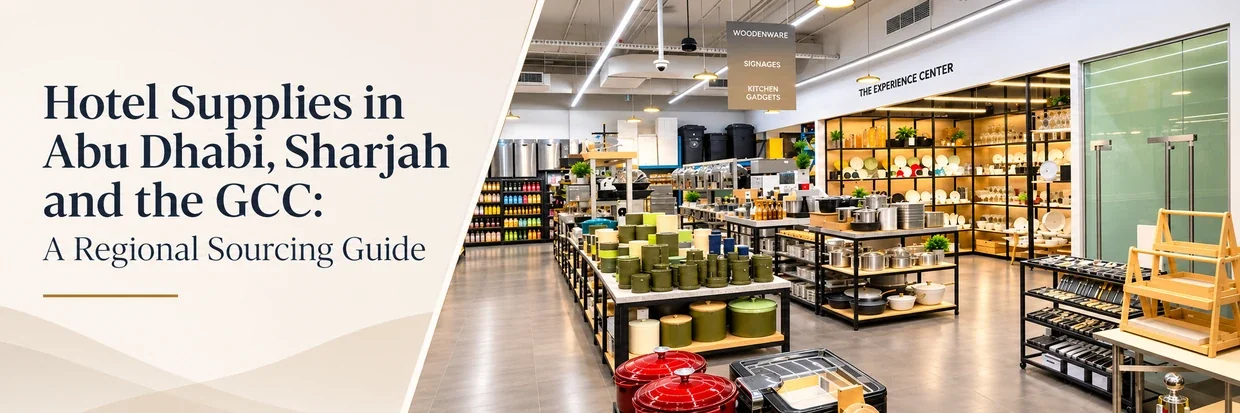
Institutional orders are too big to buy from a photo. In a Khiara showroom, you can handle compartment plates, test a lidded bowl and compare carriers side by side. The team can then guide you to the right pieces for your operation.
Showroom | Best for | Location | Phone |
Khiara Horeca | Hospital, airline and project buyers | Speedex Centre (Helo Building), Al Khabaisi, Deira, Dubai | +971 4 266 4527 |
Khiara Hospitality Supplies | Abu Dhabi institutions | Building 520, Old Airport Road, Al Manhal, Abu Dhabi | +971 2 886 3965 |
Khiara Traders | Smaller HoReCa orders | The Metro Centre, Salah Al Din Street, Deira, Dubai | +971 4 266 1772 |
Khiara Store | Wholesale buying | Al Ras, Irani Utensils Market, Deira, Dubai | +971 4 235 6470 |
Bring four details: meals per day, diet categories, your menu cycle and delivery distances. With them, the team can size your order on the spot. Healthcare, airline and institutional catering buyers looking for commercial kitchen equipment suppliers in Dubai and Abu Dhabi can visit Khiara Group’s showrooms to compare suitable products and discuss their bulk requirements.
Can’t visit yet? Send your requirements on WhatsApp, and the team will share catalogues matched to your operation.
Every tray that leaves your kitchen carries your standards. Come and choose the equipment that protects them.