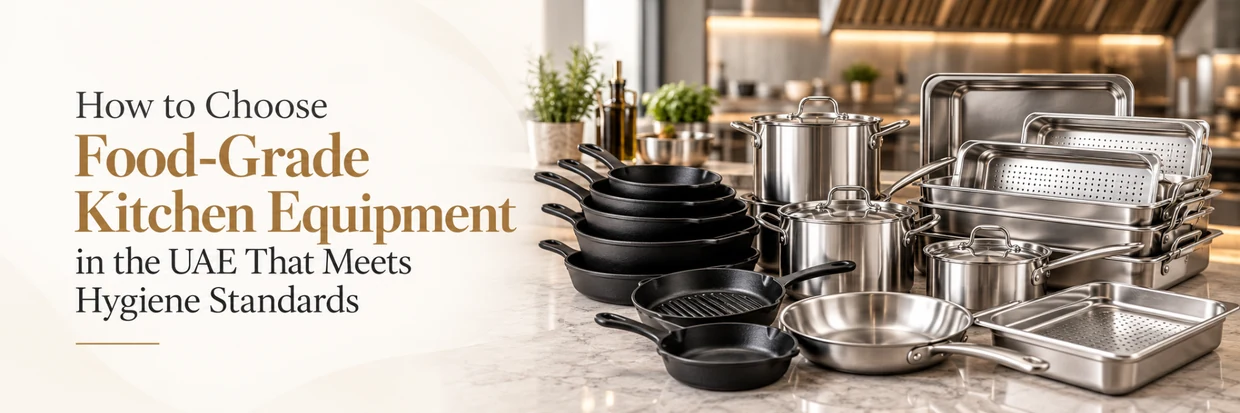
How to Choose Food-Grade Kitchen Equipment in the UAE That Meets Hygiene Standards
A pan, a pair of tongs, or a storage container might seem like small purchases. But these are the items that touch your food directly, every single day.
Choosing the right kitchen equipment in Dubai for your hotel or restaurant starts with understanding what “food-grade” means, not just picking whatever looks durable on a shelf. If you are sourcing multiple categories for a hospitality operation, our guide to hospitality supplies in UAE covers the wider procurement requirements, from tableware and buffetware to professional kitchen supplies.
This post covers cookware, storage containers and hand tools such as spoons, tongs, pans and skillets. It does not cover ovens, fryers or refrigeration units, as they follow different rules.
What “Food-Grade” Actually Means
In the UAE, materials that touch food fall under a formal standard: GSO 2231:2012, “General Requirements for the Materials Intended to Come into Contact with Food”. It covers any material that can reasonably be expected to touch food, or pass its components to food, during normal use.
Material selection is equally important when sourcing products for guest-facing operations. For more guidance on how leading hotels approach durability, materials and compliance, see our guide on how Dubai’s 5-star hotels choose their tableware.
Dubai Municipality also publishes requirements for food contact materials, so check them before importing or selling equipment. Other emirates have their own food safety authorities, so confirm the rules with the one that covers your site.
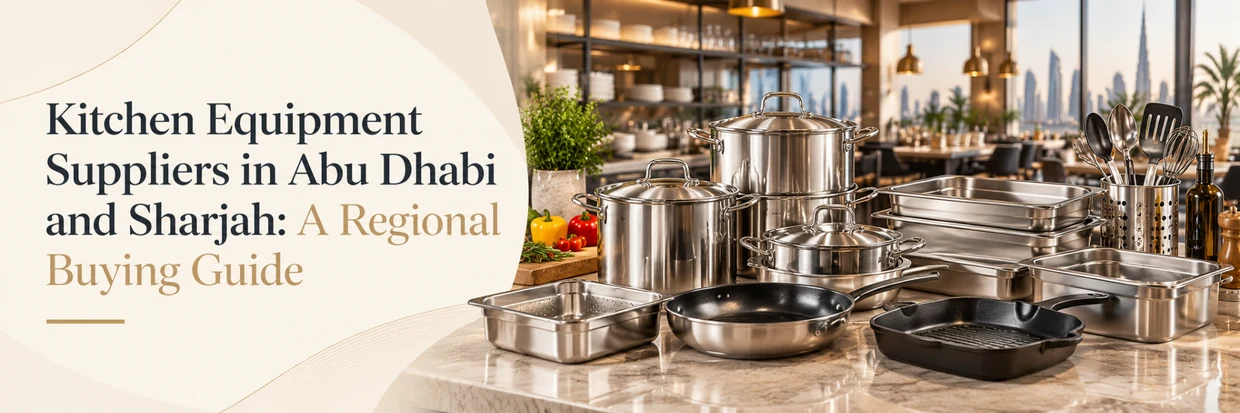
Choosing the Right Material for Cookware
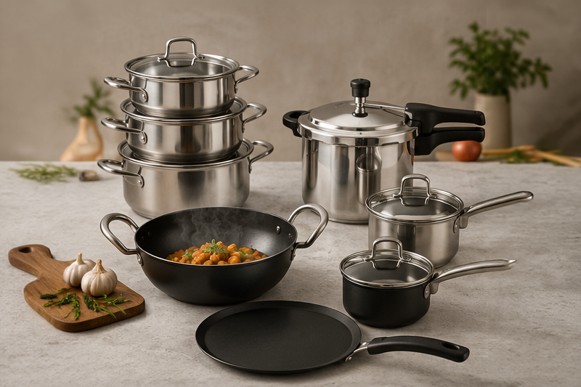
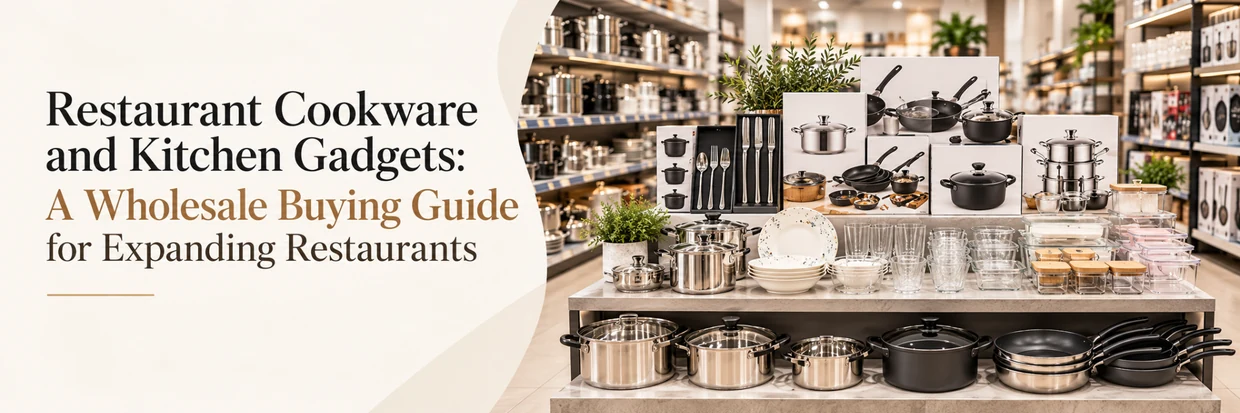
Different materials suit different kitchens. If you are sourcing cookware and kitchen essentials in bulk, it is worth working with a kitchenware wholesale supplier in the UAE that can provide different materials and product categories under one procurement setup.
- Stainless steel: Grade 304 is the standard choice for commercial cookware. Grade 316 costs more but resists salt and acidic ingredients better, so it suits pieces that handle those ingredients regularly.
- Cast iron: Holds heat well and lasts for years, but needs proper seasoning to prevent rust and sticking. Avoid cooking acidic foods like tomatoes in it for long periods.
- Non-stick coatings: Look for PFOA-free coatings. It is one of the simplest checks you can make, and any good supplier will confirm it without hesitation.
- Aluminium: Ask the supplier which food-contact standard the item meets and request the documentation.
Brands by Category
Category | Brands |
Pots and pans | Lacor, Chefset and Raj |
Kitchen tools (spoons, tongs, utensils) | Raj, Lacor and Kitchen Master |
Spoons, Tongs, and Small Tools

Small tools get touched constantly, so they matter more than people assume. A few things worth checking before you buy:
- Handles that resist heat without warping or cracking
- Colour-coded tools, which help kitchen staff avoid cross-contamination between raw and cooked food
- Smooth, seam-free construction, since gaps and joints are where bacteria tend to collect
- Certification or documentation from the supplier, not just a claim on the packaging
Food Storage Containers: What Hygiene Actually Requires
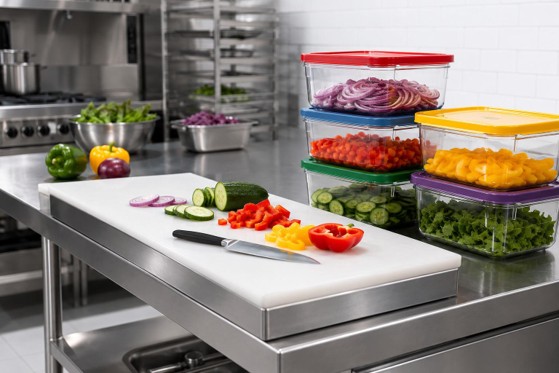
Storage containers do more than keep food fresh. They also protect it from contamination. When choosing containers, look for:
- Airtight seals that keep out air, moisture, and pests
- Food-safe, BPA-free plastic, or glass as an alternative
- Stackable, standard sizing so containers fit consistently in fridges and shelves
- Clear materials that make it easy to rotate stock properly
Certifications and Paperwork Worth Asking For
Before you buy in bulk, ask your supplier for proof of compliance. This includes conformity documentation tied to standards like GSO 2231, along with any test reports from accredited labs. A supplier that hesitates to share this is worth a second look.
This applies whether you are furnishing a single cafe or a full hotel kitchen in Dubai, Sharjah or Abu Dhabi, since the paperwork requirement does not change with order size. Suppliers who keep this documentation on hand as standard make life easier, because you won’t be chasing paperwork before an inspection or a property opening. To see what else to check in a supplier, read what makes a reliable hospitality supplier in the UAE.
Quick Buying Checklist
Equipment type | What to look for | Why it matters |
Stainless steel pans and skillets | Grade 304 or 316 | Resists corrosion and is easy to keep clean |
Cast iron pans | Properly seasoned and kept dry | Seasoning prevents rust and sticking |
Non-stick cookware | PFOA-free coating | Avoids harmful chemical transfer during cooking |
Tongs and spoons | Heat-resistant, seam-free design | Easier to clean, fewer places for bacteria to hide |
Storage containers | Airtight, food-safe plastic or glass | Keeps food fresh and free from contamination |
Common Mistakes to Avoid
- Buying uncertified equipment because it is cheaper upfront
- Cooking acidic foods like tomatoes or vinegar for long periods in reactive metals such as aluminium or unseasoned cast iron
- Ignoring handles, hinges, and joints where grime can build up
- Assuming “stainless steel” alone guarantees food safety, without checking the grade
Where to Buy and What to Ask
Not every supplier carries certified, food-grade options in every category. Ask specifically about material certification rather than assuming it is included, and ask again for bulk or bespoke hotel and catering orders, since larger orders make it more important to confirm compliance before the equipment arrives.
The same rules apply wherever your kitchen is, whether in Dubai, Sharjah, Ajman or Abu Dhabi. The GSO standards apply across the UAE, though local authorities can add their own requirements, so check with the one that covers your site.
Also Read: From Tableware to Buffetware: A Complete Guide to Hospitality Supplies for UAE Restaurants
Final Thoughts
Food-grade equipment does not have to be the most expensive option. What matters is knowing what to check before you buy: the material, the coating, the certification and the paperwork behind it. Get this right the first time, and hygiene compliance stops being a worry every time an inspector walks in.
Khiara Group has supplied hotels, restaurants and caterers since 1955. Our range covers more than 30,000 products, with over 15,000 ready in stock, including cookware from Lacor, Chefset and Raj and kitchen tools from Raj, Lacor and Kitchen Master. Our showrooms in Dubai and Abu Dhabi let you compare materials in person before you commit. Whether you need a single order or a full kitchen fit-out, contact our team and ask for the material and compliance documents for the items you are considering.